In which the human behind the cat returns, setting new research goals and dreams for the future (one that hopefully does not involve the evil segregation machine that has become social media).
So, what now?
It’s a question I’ve been asking myself a lot lately. For those in the know, for the past couple of years I’ve been immersed in my master’s degree in Socially Engaged Practice in Museums and Galleries — a refreshing blend of museum studies with activism and social justice that reaffirmed my dedication to heritage and disability rights. Though, when I started the course, I had no intention of leaving Superstition Sam dormant for so long. In fact, I even sold the heck out of it in my studentship application, explaining that one of the reasons why I needed this course was so that I could deepen my understanding of Folklore.
But life, as it often does, had other plans. Around the same time I started my course, I began to witness (and experience) a surge of hate and extremism online, and decided that was simply something that I could no longer accept or be associated with. Competitiveness. Total strangers that delight in pulling each other apart for non-issues. People that project their own insecurities onto their screens, completely misreading the intentions of others, all while avoiding any introspection of their own. Did we go to therapy together or something? Then, why are you acting like you know me? Well, been there, done that and I am not going back again. After all, the purpose for which I created Superstition Sam — to explore the benefits of folklore for mental well-being — does not sit well with the fact that the very platforms currently available to share it are actively harming our mental health.
So, at the moment, I am approaching graduation. And since it will likely be with a Distinction, as I’ve achieved a First in seven out of nine modules (humble brag), I feel it is time to give Sam another chance. The big difference being that I now know my skills are no longer intuitive; they’ve been certified on paper. But never again will I be active on social media, except for announcing new articles. I am perfectly aware that our world is slowly descending into it being nigh on impossible to not be spread thin, like butter, over so many platforms… But my own personal goals for this project have never been about being seen, followed or validated. Just a very old childhood dream of working in the heritage sector. During my museum studies, my research focused heavily on celebrating lived experience and human diversity, while upholding collaborative values and accessibility. So, it makes sense to me that Superstition Sam will now become my road towards a PhD. Even if I have to walk it alone.
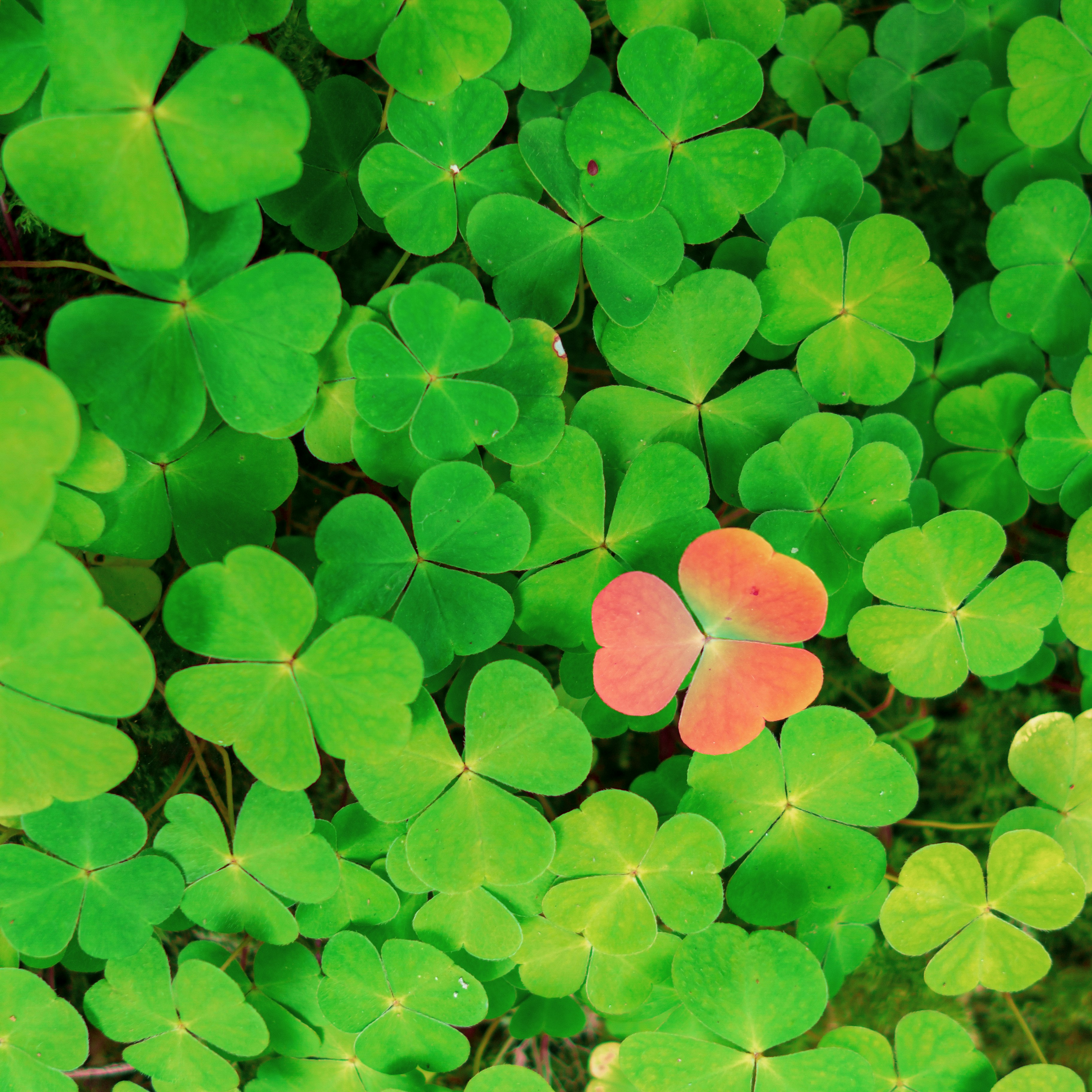
Image Description: a photo of a reddened three-leaf clover growing alongside many green clovers. Image Credit: Free Nomad via Unsplash.
The Ethos of Superstition Sam
After all, this is my project. Always was. Superstition Sam started out as my alter ego — a mascot behind an unambitious hashtag created during the pandemic and born on the same day as my late grandmother’s birthday. This was a time when everything felt uncertain, when the world seemed to be unravelling into chaos. And for me personally, the only thread holding things together was Folklore Thursday. How I looked forward to it each week — seeing people sharing their culture, their stories, their child-like hopes for a kinder, better world. Truly, I cannot express how heartwarming it felt to see others out there who also wished for a different future. Who, like me, believed that Folklore could positively contribute to our society’s understanding of difference, fostering empathy among peoples and bringing minoritised voices into the spotlight.
Growing up in Portugal — a country that’s often overlooked or mistaken for Spain, even in the most elite folklore circles — my relationship with superstition began early, shaped by a working-class family who leaned on proverbs and folk wisdom to make sense of their life circumstances. Luck just seems to have evaded us at every turn, so no wonder superstition became a coping mechanism for my predecessors; a way of wishing for peace and protection from the unpredictable forces of life. Case in point, the first present I ever received from my father (one of the unluckiest people in my family, by far) was a tiny silver bracelet adorned with a mano fica, a pentagram, a horn and a moon — baby-sized charms that embodied his belief that others were always out to harm him, and that protection was something you had to actively seek. This early conditioning went on to influence my core ethos for Superstition Sam: that folklore can be a deeply personal means of navigating life, and hoping for safety and happiness against all odds.
Having inherited my father’s bad luck instead of a career in heritage, I have been bouncing between customer service, creative media and museums for far too long. (Thanks, dad! Your charms didn’t work.) Yet, even in these tumultuous years, these experiences have shaped the foundations of Superstition Sam, helping me gather skills in writing, illustration, design, audio and video editing — and even social media management, back when social media was still, I dare say, a kinder place. Now that I reflect on it, the circumstances of Superstition Sam’s creation feel eerily similar to where I find myself at the moment. Back then, I had just graduated with a First Class degree in Creative Writing, but the future felt bleak. Still, I pressed on, drawing comfort from my favourite superstitions: black cats (deeply misunderstood, but lucky in my eyes), four-leaf clovers (another rare gift from my father, who once found one in a field), and acorns (which my granddad always carried in his pockets, as a symbol of youth and potential). Throughout the pandemic, these were the stories that I held close; the ones that helped me make sense of the world. And it was then that I realised, there is also power when we craft our own beliefs, either from lived experience or subconscious association. As an example, my own personal made-up folklore includes: orange gerberas to honour the dead, red socks for long journeys, and always eating seafood on New Year’s Eve. Start the year as you mean to live it, and what not! Which is probably why, in this time away from social media — away from its endless ads and recycled content turning us into good, little serfs — I began to think about Folklore differently.
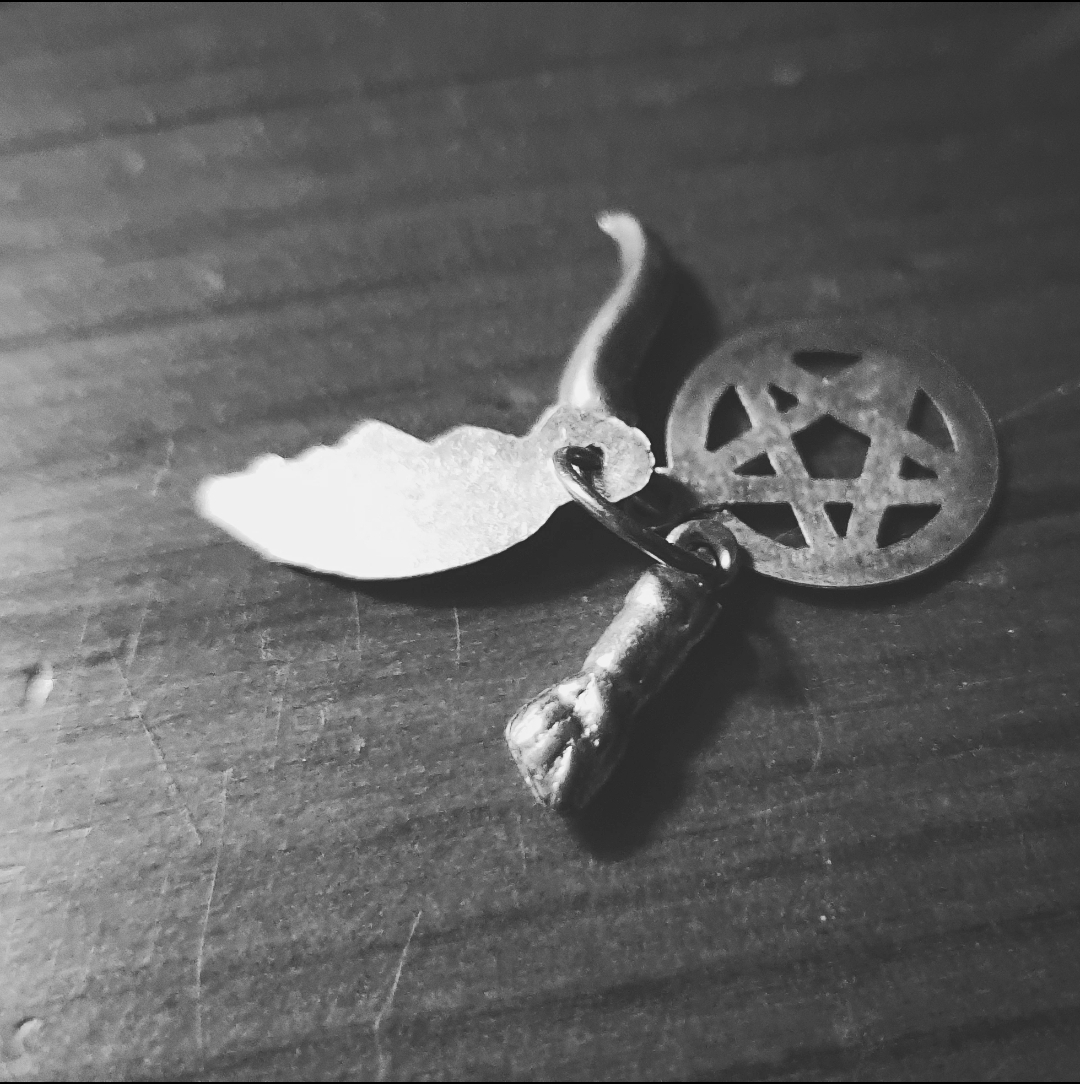
Image Description: a photo of the four baby-sized charms gifted by my father. Image Credit: Superstition Sam.
My Folklore is Better Than Yours
Armed with the tools my course has provided me in museum studies and heritage theory, as well as a renewed sense of confidence in my abilities — for better or worse, lately, I have been delighting in thinking critically about Folklore. Especially through lenses similar to those of the Research Centre for Museums and Galleries (RCMG) and Wellcome Collection, who I consider pioneers in the museum sector for challenging societal norms and promoting acceptance of difference. The RCMG, for example, has spearheaded countless “hidden history” projects, shining a light on the stories of marginalised communities — those excluded due to race, gender, class or disability. Similarly, the Wellcome Collection’s Being Human exhibit, celebrated as one of the most accessible in the UK, has made strides in normalising disability and neurodiversity, while fostering a culture of caring for each other more deeply and significantly. These initiatives have resonated with me on so many levels. Like them, I now aspire to champion anti-colonialism, democratise collections (ensuring content isn’t controlled by the elite few), prioritise accessibility, and embrace collaborative practice. Most importantly, I want to do what I can to highlight the intersectionalities that bind marginalised communities, showing how much we have in common, even if we don’t always realise it.
It is with this lens that I have come to see Folklore as a double-edged sword, at times — capable of preserving culture and fostering community, yes. But also to exclude and oppress. This is why I want to look at superstitions that not only celebrate unity, but have contributed to reinforcing harmful stereotypes, marginalise outsiders, or even justify societal hierarchies. Discussions like these have been ongoing in the Heritage sector for years (i.e. Harrison, 2010), with professionals acutely aware of how the ruling classes might appropriate history to justify nationalism. Similarly, and since Folklore is technically Intangible Cultural Heritage, there is also a risk that it may be co-opted by conservative narratives. The ethics of Folklore are simply too fascinating to leave unexplored — especially when some of the methods utilised to share it online are dangerously close to conservative propaganda.
The recent surge in Folklore’s popularity has been widely reported (i.e. BBC, 2024) and while this is indeed exciting, the stuff I’ve been studying these past couple of years has allowed me to identify that this may also come with downsides. Ceaselessly romanticising Folklore through an aesthetic, nostalgia-driven lens for instance, poses a risk of allowing it to become something else entirely, separated from the socio-political contexts of its time (Bendix, 2019; Knell et al., 2012, etc.). In other words, it contributes to a simplified, whimsical version of the past, while sanitising history and ignoring the complexities and struggles of the people that shaped these traditions. But far from this being me telling anyone what to do! I am simply saying: I personally don’t want to do that any more. And there is room for everyone in the playground.
So, to deconstruct it a bit further. Folklore can be appropriated as a vehicle for conservatism since people are encouraged to cling to the “good old days”, while conveniently forgetting the hardships and inequities of those times. In some cases, narratives are even added while others are entirely forgotten, depending on personal taste and aesthetic cherry-picking. Similarly, I don’t feel comfortable watching Folklore get trapped by the traditions established by privileged figures from centuries ago anymore. These were individuals who had the luxury of codifying their beliefs into “forced knowledge” — a term I borrow here from Will at Wyrd Zine (Great talks, Will!). Today, this dynamic might even play out in a new form: a cult of personality around certain self-proclaimed “folklore experts”, whose expertise is measured by follower count rather than academic rigueur. (Posh!) Still, I do try to keep an open mind about the value of academia. After all, what does an academic track record really signify? A leg up in life, afforded by privilege — whether social, economic, or familial? Even as someone who might claim to be “cursed” by bad luck, I understand my need to interrogate my own privileges. After all, my folklore isn’t inherently better than yours, nor is yours better than mine. And just because a story wasn’t recorded by a Victorian academic two hundred years ago, that shouldn’t make it any less valid. On this topic, I have come to draw a lot of inspiration from Lucy J. Wright’s folklore manifesta “Folk is a Feminist Issue”, which champions the importance of recognising and valuing diverse narratives, alongside the creation of new traditions that represent a renewed understanding of our human differences.
“A farm worker talking in late 1960s remarked, ‘I don’t want to see the old days back. Every bad thing gets to sound pleasant enough when time has passed […].’ However, within the middle-class imagination, these lives of grinding poverty and deprivation alongside narratives of both aristocrats and servants in the stately home, were made symbols of a domesticated old world with traditional values.”
– Knell, S. et al. (2012)
Conclusion
As I recover from the trauma of certain social media interactions two years ago, I can now see them as a strange kind of blessing, since they allowed me to step back and examine social constructs from a distance, and recognise how easily we might fall into trends out of a desire to belong, even when these trends might cause harm. This is, after all, what my course has reinforced: this awareness that curators have a duty to challenge social issues, well-beyond personal tastes or aesthetic preference. Going forward, I too want to find out how Folklore has marginalised certain groups throughout history, or how it might now be misused as an instrument for upholding cultural norms, power structures and collective fears. Out there, museums and heritage professionals are discovering the power of socially-engaged practice; that uncovering “hidden histories” can offer a fuller, more well-rounded understanding of our human experience. Why then, can’t Folklore have the same treatment? Looking at the state of our world, it is clear to see that “preserving the past” in a static, idealised form is no longer sustainable. Let’s instead “present the past” then — acknowledging its flaws, discussing its impact, and striving to do better for our collective future.
With all that said, this post also serves as a reminder to myself that Superstition Sam‘s new purpose is essentially to be my stepping stone toward a PhD. (Same with Salt & Mirrors & Cats, which I’d love to take a step further one day.) Do come along on this journey, if you fancy. We’ll discuss heritage, folklore and superstitions, and explore their connections to human creativity, psychology and cross-cultural friendship. I can’t promise it won’t feel slightly experimental — after all, it is the duty of every socially-engaged museum practitioner to keep a reflexive practice and adapt to the challenges they encounter. But heck, I am giving it a shot. If not for my future, for my own mental health — once more, with feeling.
Sources and Further Reading:
BBC (2024) This Country star says folklore’s thriving on social media. Available at: LINK
Bendix, R. (2019) ‘In Search of Authenticity: The Formation of Folklore Studies’ in Watson, S., Barnes, A. and Bunning, K. (eds.) A Museum Studies Approach to Heritage. London: Routledge.
Harrison, R. (2010) ‘The Politics of Heritage’ in Harrison, R. (ed.) Understanding the Politics of Heritage. Manchester: Manchester University Press.
Knell, S., Axelsson, B., Eilertsen, L., Myrivili, E., Porciani, I., Sawyer, A. and Watson, S. (2012) Crossing Borders: Connecting European Identities in Museums and Online. Linkoping: Linkoping University Press.
Lynch, B. (2011). ‘Collaboration, contestation, and creative conflict: On efficacy of museum/community partnerships’ in The Routledge Companion to Museum Ethics: Redefining Ethics for the Twenty-First Century Museum. London: Routledge.
RCMG and National Trust (2023) Everywhere and Nowhere: Exploring histories of disability across the National Trust. Available at: LINK
Sandell, R. (2007) Museums, Prejudice and the Reframing of Difference, London and New York: Routledge.
Wellcome Collection (2025) A free museum and library exploring health and human experience. Available at: LINK
Wright, L. (2025) Folk is a Feminist Issue. Available at: LINK
 Superstition Sam