We’re back with another in-house article, in our quest to discover superstition and its history and influence on human psychology! In our previous article, we looked at how superstitious belief can sometimes feel like much needed ‘succour’ in a strange world. But there are dark aspects to magical thinking as well, like everything in life. Enter… the curse.
ACKNOWLEDGING COMPLEX THEMES
Inspired by family superstitions and a (semi)rural upbringing, the Superstition Sam project was born out of a kindling hope of offering an alternative perspective to superstition. One that may help us to appreciate the little things in life beyond our daily ‘taxes and laundry’ to improve mental health; claim the validity of good-natured personal rituals such as crossing your fingers, greeting a magpie, and so on, to bring self-confidence; not to mention, uplift and celebrate the variety of traditions and folklore of our planet.
In our previous in-house article, we deliberated on some of these peaceful ways in which superstition might be used to ‘spice up’ our life or bring succour during hard times. But recently, I have been pondering about socially engaged practice in museums, and how practitioners in the sector are being encouraged to address and acknowledge the complex and difficult past of their collections. It would certainly be interesting to explore that in the field of folklore as well. Superstition in particular has many historical associations with colonialism and a range of other issues related to religion and race, for instance. And as much as I would personally like superstition to be capable of doing a world of good, I know that it can still perpetuate harm at times.

Photo Credit: Tim Foster via Unsplash.
WHAT MAKES A CURSE?
Enter… the curse. Just one of the many aspects of this ‘dark side of superstition’, and one we shall be briefly discussing today. If superstition is, loosely, the belief that a supernatural being or object can bring you some sort of luck, then cursing could be said to be the bad luck. Although this is subjective and I always prefer to view things from a spectrum, from a primordial sense, it is natural for humans to believe that all ‘good’ must have its ‘bad’. After all, there is light and dark, above and below. Studies have suggested that most people do prefer positive superstitions to negative ones though (Wiseman and Watt, 2004) — but it would be naive to deny that some people might use superstition for less than savoury reasons, such as to cause harm to others.
Accordingly, when properly defined in a dictionary, a curse is said to be a “solemn utterance intended to invoke a supernatural power to inflict harm or punishment on someone or something”. Though it might be worth mentioning that curses aren’t all necessarily ‘uttered’, as some types of cursing may involve staring (e.g. the evil eye), or binding — the latter, involving things such as poppets, effigies, pins, string, etc. Synonyms might include ‘hexed’, ‘ill-wished’, ‘overlooked’, etc. But all this would be too extensive to get into right now! Let’s just take it slowly and get acquainted with some of the history of cursing, first. There will always be other articles to write…

Photo Credit: Musée du Louvre.
A BRIEF HISTORY OF CURSING
According to western historians, the earliest known practices of cursing can be traced back to the 6th century BCE (Vyse, 2018). Contemporary stereotypes usually like to imagine such ancient curses as ailing from Egypt, in the shape of pyramids that cannot be opened lest the world plunge into chaos! And so on… But the archaeology suggests that the crafting of lead tablets might have been much more of a common daily practice, at least for Romans from around the 4th century CE — when artisans were commissioned to write text or drawings onto these flat metal surfaces à la carte. Admittedly, such maledictions might have been performed for superfluous reasons such as against unrequited lovers, to inhibit the performance of athletes or other public figures — but they could also be done to try to punish thieves or even opponents in legal proceedings.

Photo Credit: K. Mitch Hodge, via Unsplash.
THE CURSE TABLETS OF BATH
One of the most popular archaeological finds concerning this kind of ‘curse tablets’ is therefore associated with the Roman springs of Bath, South West England, where over 130 lead sheets or plates seem to have been disposed of or thrown into the sacred waters (Cunliffe, 1983, Tomlin, 1992, Davenport, 2021). According to site interpretation, the location would have also been a temple to the Roman goddess of justice, Minerva — locally known as Sulis Minerva. As such, most tablets seemed to be appealing to this righteous deity for the return of stolen objects, suggesting these curses represent the injustices done to ordinary people of the time, who most likely would have journeyed to the location for this purpose alone. And some R&R afterwards, I’m sure.

Photo Credit: Roman Baths.
Today, cogent minds might dismiss this as absurd, but we have to acknowledge that these may have originated from desperate people that had no other means to address unaccountable injustices and wrongdoings that were ignored by earthly law. And the practice of cursing was not restricted to polytheistic pantheons deemed ‘pagan’ either, as even the Christian Bible itself contains the following example of cursing:
“Hold not thy peace, O God of my praise. For the mouth of the wicked and the mouth of the deceitful are opened against me: they have spoken against me with a lying tongue. They compassed me about also with words of hatred; and fought against me without a cause. For my love they are my adversaries: but I give myself unto prayer. And they have rewarded me evil for good, and hatred for my love. Set thou a wicked man over him: and let Satan stand at his right hand […] As he loved cursing, so let it come unto him: as he delighted not in blessing, so let it be far from him. As he clothed himself with cursing like as with his garment, so let it come into his bowels like water, and like oil into his bones….“
Psalm 109, King James Bible Version
Too intense to quote here in its entirety, Psalm 109 is also known in other translations as “Prayer For Deliverance From Enemies”. What’s interesting about it (beyond the creativity of some of the punishments…) is that parts of the text appear to suggest that it may have been more of a countercurse for someone who was wrongly accused — e.g. “As he loved cursing, so let it come unto him“. Which brings us to the most difficult aspect of cursing that is hard to reconcile, at least from my perspective. Perhaps it can be justifiable to ask for the punishment of someone who did wrong. Perhaps. But what happens when the person doing the cursing has a different conception of wrong? What if they’re not trying to recover something stolen, but instead simply curse another for the mere fact that they exist? Does it not matter what the cursed person will feel? In other words, why do we fear others just because of how they look or what they have…? These are all questions that certainly cannot be answered here, by myself alone. But they are certainly, the dark side of cursing itself.
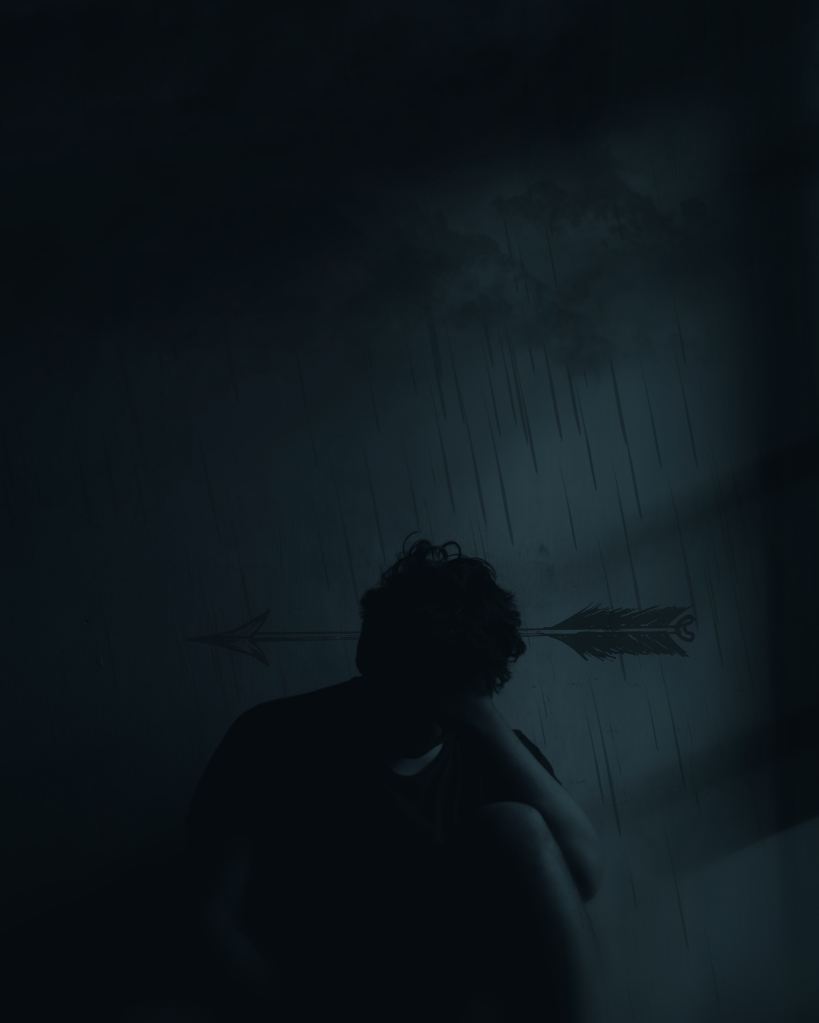
Photo Credit: Bernard, via Unsplash.
A CURSE IS LIFTED (OR NOT)
So, to ponder some more from this personal perspective, I’ve wondered myself whether I have been the subject of a couple of family curses. Yeah, I know… But this is the kind of curse that is said straight into your face just because you exist, spittle and all. So much like the pilgrims of Sulis Minerva, I’ve sought means to be rid of these curses too. For research purposes, naturally! I can’t go about crafting a lead tablet or asking someone to, not least because lead is toxic! Thus, enter… the local witch. To be honest, this was a respectable and popular person, and I genuinely thought she’d ‘get the job done’. But all she did was tell me that I was not cursed at all, with leaving recommendations to the effect of: “Life will be just peachy if you simply be yourself! And what you are is a priestess, please join our coven, Terms and Conditions apply.”
I confess I hadn’t been expecting much, but since I am interested in how superstition can intersect with psychology (Jahoda, 1970, Hood, 2009), I began to mull over whether there might have been other ways in which ‘healers’ like this could be going about their practice. Regardless of whether my curse(s) are real or not, I think I could have been told: “Yes, you were cursed. But I’ve done this thing, and now you’re alright. Hooray!” Because how can anyone not help but to think: “Great, I’m still cursed!” — since nothing was done? In other words, if you’re in the business of helping people who think they’ve been hexed, why not see yourself as a sort of ‘stand-in’ Cognitive Behavioural Therapist and reassure people that you’ve helped them, so that they can believe it themselves? Surely better than saying you’ve done nothing whatsoever? Bit weird.
But what do you think? Can you put yourself in the shoes of the pilgrims of Sulis Minerva? Would you ever consider employing something like a curse tablet? Would you ever curse someone just because you’re… jealous? And do you think folk healers should tell people they’re free of their curses, even if they were not cursed to begin with?
Thank you for reading!
If you enjoyed this article, please consider getting me some cat biscuits by clicking the button below — so that I can find all the superstitions!

Further Reading:
Adams, J.N. (1992) ‘British latin: The text, interpretation and language of the bath curse tablets’, Britannia (Society for the Promotion of Roman Studies), 23, pp. 1-26.
Cousins, E.H. (2020) The sanctuary at bath in the roman empire. Cambridge: Cambridge University Press.
Cunliffe, B. (1983) ‘The temple of sulies minerva at bath: Finds from the sacred spring’, Archaeology (Archaeological Institute of America ), 36(6), pp. 16-23.
Davenport, P. (2021) Roman bath: A new history and archaeology of aquae sulis. London: The History Press.
Gager, J.G. (1992) Curse tablets and binding spells from the ancient world. Oxford: Oxford University Press.
Gerrard, J. (2007) ‘The temple of sulis minerva at bath and the end of roman britain’, The Antiquaries Journal, 87, pp. 148-164.
Hood, B. (2009) Supersense: From superstition to religion – the brain science of belief. London: Constable & Robinson.
Jahoda, G. (1970) The psychology of superstition. London: Penguin Books.
The Roman Baths (2023) Roman curse tablets. Available at: https://www.romanbaths.co.uk/roman-curse-tablets
Death in a Crescent Bath, Somerset (S10, EP7) (2003) Directed by Time Team.
Tomlin, R.S.O. (1992) ‘Voices from the sacred spring’, Bath History, 4, pp. 7-24.
UNESCO (2023) Memory of the world: The roman curse tablets from bath. Available at: https://unesco.org.uk/portfolio/memory-of-the-world/
University of Oxford (N.D.) Curse tablets of roman britain. Available at: http://curses.csad.ox.ac.uk/index.shtml
Vyse, S. (2019) Superstition: A very short introduction. Oxford: Oxford University Press.
Wiseman, R. and Watt, C. (2004) ‘Measuring superstitious belief: Why lucky charms matter’, Personality and Individual Differences, 37(8), pp. 1533-1541.
Please Note: Our articles are written for entertainment purposes only, as superstitions and folklore in general do not constitute adequate professional or medical advice. Please use your own personal judgement if you would still like to attempt to replicate any superstition or folk remedy. And if there is anything in life that is troubling you, please do seek your local mental health support team ♡
 Superstition Sam
You must be logged in to post a comment.